
This post may contain affiliate links. Click here to read my affiliate disclaimer policy.
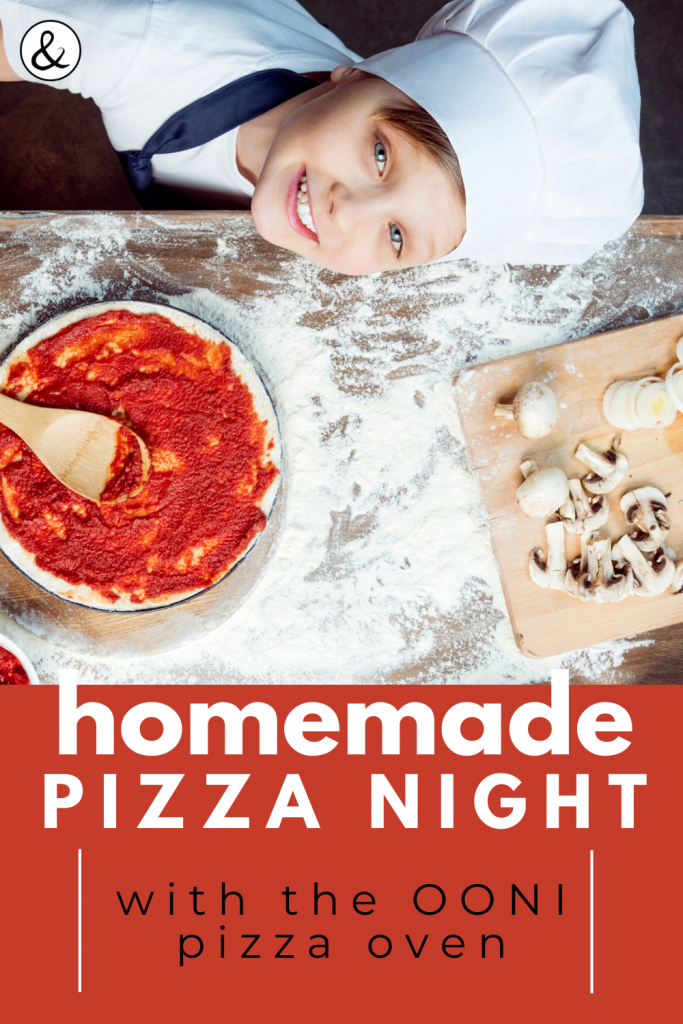
If you aren’t familiar with the OONI wood-fired pizza oven, it is a portable pizza oven that is both affordable and saves on space! This OONI pizza oven recipe works perfectly in our OONI ovens.
We absolutely love our OONI pizza ovens and it is a great way to entertain guests by having a make-your-own-pizza dinner party or as a summer backyard barbecue staple.
Please note: I am not a chef, I am not a professional pizza maker and I do not own a pizza restaurant. What I do love is making pizza and I feel like the OONI pizza ovens make it easy for our family to do that. Make your own pizza family night is a regular at our house and our kids love it.
I love the pizzas that come out of my OONI pizza ovens. I use the OONI accessories as recommended by OONI.
Here is a recipe for making your very own homemade wood-fired pizza in the OONI Pro pizza oven.
For wood-fired pizza, you are going to need a special pizza dough recipe. You wouldn’t want to use just any pizza dough recipe since this is going to have to go into a high heat oven. The trick to wood-fired pizza is using the right pizza dough.
Homemade Pizza Using the OONI Pizza Oven
OONI Pizza Dough Recipe: Makes about seven to eight personal sized pizzas.
- 4 cups 00 flour: Antimo Caputo Pizzeria Flour
- 1 1/3 cup room temperature tap water
- 1 packet Rapid Rise Yeast: Fleishmann’s RapidRise Yeast
- 1 tsp sugar
- 1 tsp salt
OONI PIZZA DOUGH RECIPE DIRECTIONS:
- Empty yeast packet into warm tap water. Place sugar in water. Gently whisk with a spoon (or your finger). Let proof for 5 minutes. You know the mixture has proofed when it starts to froth at the surface.
- In a medium sized bowl place flour. Create a fontana (a volcano-like hole in the center of the flour). Pour proofed yeast mixture into the hole of the fontana. Gently circle your finger around the rim of the fontana, mixing slightly more and more flour into the water mixture.
- Eventually, all the flour should be mixed into the center until you have a ball of dough. If it’s slightly wet add just a dusting of a little flour until it isn’t so sticky. If the ball of dough is a little dry, add a little bit of warm water to keep it just moist.
- Line a larger bowl with a bit of olive oil, and place dough ball inside. Drizzle olive oil on top of the dough ball and then cover with a damp kitchen cloth. Let it rise until the dough has doubled in size.
Instructions for Cooking a Pizza in the OONI Pro Pizza Oven:
- Roll out pizza dough as thin as possible. For the OONI pizza oven, remember “Thin to Win”. This will ensure that the pizza dough cooks evenly along with your ingredients. The last thing you want is doughy pizza. You want a nice consistent crust. It doesn’t have to be as thin as a cracker but try to get it as thin as possible.
- Place a generous amount of flour (or cornmeal if you have it) on your pizza peel. This ensures that your pizza will slide off onto the pizza stone. You don’t want to have your pizza dough stick to the peel or it could ruin the pizza.
- Place the thinly rolled out dough on the floured pizza peel. Top with a spoonful or two of your favorite tomato or pizza sauce, and spread thin on surface of the dough. Remember to go easy on the sauce. The more sauce, the less cooked your dough will be on the surface.
- Place all the toppings of your choice on top including shredded mozzarella cheese (or your favorite cheese for pizza). It is best to use toppings sparingly. A little will go a long way!
- Make sure your OONI Pizza Oven is blazing hot, reading above 600 degrees. Transfer the pizza into the hot oven and on top of the pizza stone, and close the lid. Let it cook for a quick minute. Looking at the chimney, you should see white to grey colored smoke. This means it’s cooking well. If you start to see black smoke, open the oven lid immediately and pull the pizza out to make sure nothing is burning.
- After about a minute of cooking, pull the pizza out and turn it 180 degrees to cook the other side. If you get good using the pizza peel, you may be able to turn it while the pizza is sitting on top of the pizza stone.
- You’ll know when the pizza is done. The cheese will be slightly browned. The outer pizza crust will be mildly blackened. The toppings will be sizzling. Your mouth will be watering.
If you are interested in learning more about the OONI Pro pizza oven, check out our article about HOW TO USE THE OONI PIZZA OVEN. (Please note, the OONI pizza oven was formerly called the UUNI pizza oven.)
The OONI Pro Pizza Oven makes the perfect gift! Purchase yours here!
Amazon and the Amazon logo are trademarks of Amazon.com, Inc, or its affiliates.




This came out perfect, thank you.
Hi Tiffany,
I’m so glad you are loving this OONI pizza recipe! We love our OONI and the amazing pizzas we can make right at home. Enjoy 🙂
Best,
Tabitha
About how long does it take for your Dough to rise and when do you add the salt?
It makes me happy to hear that this OONI pizza is a hit with you. We adore our OONI and the incredible homemade pizzas it makes. Indulge ????
I completely agree with the “Thin to Win” approach when it comes to pizza dough! It makes such a difference in achieving that perfect, crispy crust. I always try to keep my toppings light too—it lets the flavors shine through. If you’re looking to level up your pizza-making skills, I highly recommend using the Suika Game platform. It’s a fun way to hone your culinary skills while enjoying the process!
Wow, that OONI pizza oven method sounds amazing! I’ve been trying to get a perfectly cooked pizza base at home, and the key seems to be high heat and not overloading the sauce. Speaking of addictive things, have you tried the Suika Game? It’s strangely captivating and a fun way to relax while waiting for that perfect pizza bake.
The article’s note about using a fontana center to fold the flour into the proofed yeast actually explains why standard dough struggles with those high temperatures. Making sure the mixture stays just moist before letting it rest really changes how the 00 flour bakes. poople pairs well with those kind of detailed prep reminders when you’re mapping out new cooking gear.
This pizza looks amazing, especially that crust! I was reading Pizza Boy vs MILFs earlier and somehow ended up craving pizza, so this recipe showed up at the perfect time.
Making homemade pizza with the OONI oven is such a rewarding family activity. Your emphasis on using the right dough consistency really resonates with me. Much like finding the perfect word sequence in a challenging puzzle, achieving the ideal crust thickness requires patience and the right strategy. This recipe makes it look so approachable for anyone wanting to elevate their backyard dining experience!
Tried the thin to win tip last weekend for our make-your-own pizza family night and the crust came out perfectly crispy. We had sendthesong playing in the background while the kids topped their own personal pizzas – made the backyard barbecue vibe even better. Thanks for the fontana tip for mixing the 00 flour!
The tip about rolling the dough as thin as possible (‘Thin to Win’) made a huge difference for our homemade pizza nights! We also started designing custom pizza topping cards using an AI image generator for our family gatherings, which the kids loved. Thanks for sharing the detailed dough directions!
The fontana method makes such a difference for getting the dough consistency right before cooking in high heat. We hosted a pizza-making evening with friends and generated a customized background playlist using songloom to keep the mood lively while everyone waited for their pies to bake. Thanks for sharing the detailed OONI tips!
Tried the fontana method last weekend and the dough came together so much better for high heat – stayed just moist and doubled nicely. We did a make-your-own pizza night with thin crusts and light sauce like you suggest, and had songbylink playing in the background while everyone waited for their pies. Thanks for the detailed OONI tips!
The ‘Thin to Win’ technique and the fontana method for proofing the yeast completely transformed our crust consistency—keeping it light and crisp without getting doughy under the high heat of the pizza oven. We also love documenting our weekend pizza-making sessions and enhancing the food photos and recipe cards with FreeCreate AI Image and Video Studio to share with our family dinner group. Thank you for such clear, practical wood-fired baking instructions!
The fontana method for folding the flour into the proofed yeast is a great detail – keeping the dough just moist before it rises seems to make all the difference with 00 flour at those high temperatures. The “Thin to Win” rule makes a lot of sense for an oven running above 600 degrees, and going easy on the sauce is a smart call for such a fast bake.
Really appreciate the fontana method detail — keeping the dough just moist before the rise makes a real difference with 00 flour at those temperatures. Thin to Win is now our default for backyard pizza nights.
The ‘Thin to Win’ principle really is essential for high-heat pizza ovens to ensure the crust cooks through evenly without getting doughy. Keeping toppings light and turning the pizza after a quick minute makes backyard pizza nights so much fun.
Looking for the Best Dentist In Morton Grove IL? Choosing an experienced dental professional can help you achieve a healthy and confident smile.
The fontana method is the detail most recipes skip, and it genuinely changes how the 00 flour hydrates before the rise. Thin to Win plus a light hand on the sauce is what finally got our crust crisp instead of doughy at that heat. I keep a small daily word puzzle habit going at pinpointanswertoday.io while the dough proves.
The fontana method is the step most recipes leave out, and it really changes how the 00 flour hydrates before the rise. Thin to Win plus a light hand on the sauce is what finally got our crust crisp rather than doughy at that heat. When a reel of our pizza night had a track I could not name, songfinderbylink.com identified it from the link.
The fontana step is the part most pizza write-ups skip, and it really does change how the 00 flour hydrates before the rise. Thin to Win plus a light hand on the sauce is what finally got our crust crisp instead of doughy at that kind of heat. Bookmarking this for the next backyard pizza night.
The fontana step is the part most pizza write-ups leave out, and it really does change how the 00 flour hydrates before the rise. We also found that flouring the peel with a 50/50 mix of semolina and 00 stops the base from sticking when the oven is past 600 degrees. Bookmarking this for the next backyard night.
The 850F preheat note is the detail most people skip, and it is usually why the first Ooni bake comes out pale and chewy instead of leopard-spotted. Giving the stone a full 20-30 minutes after the display hits temperature made a bigger difference for me than changing flour. Nice timing breakdown on the dough ball stage too.
The fontana step is the part most pizza write-ups skip, and it really does change how the 00 flour hydrates before the rise. Thin to Win plus a light hand on the sauce is what finally got our crust crisp instead of doughy at that kind of heat.
The 700F preheat guidance is the detail most Ooni recipes skip, and it is the one that decides whether the base sets before the toppings scorch. Resting the dough long enough to relax also made the biggest difference for me — my first attempts kept snapping back and ended up thicker in the middle than at the cornice. Freezing the extra balls has saved more weeknights than any other trick here.
The smoke-colour cue is what I have been missing here. I kept pulling pizzas early because the crust looked pale at the sixty second mark, and the white-to-grey signal from the chimney explains why the stone was still catching up. Rotating at the halfway point rather than waiting for the cheese to brown has also helped. Thanks for writing the timing out so plainly.
We finally caved and bought the Ooni this summer, and the biggest surprise was how much the dough matters compared to the oven itself. Our first attempts puffed up like pita because the dough was too cold going in. Letting the balls sit out for a good hour before stretching changed everything. Also, I now keep two spare peels nearby, since fumbling one launch with guests waiting is the fastest way to lose your nerve.